



Narendra Modi's meeting with Sukhbir Singh Badal in 2026 renewed speculation about a possible BJP-SAD reunion.
The SAD is seeking to rebuild its political base, while the BJP aims to expand its presence in Punjab.
The parties formally announced their alliance on Tuesday, with the SAD designated the senior partner and both targeting all 117 seats.
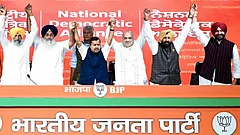
Ahead of the 2027 Punjab Assembly elections, the Bharatiya Janata Party (BJP) and the Shiromani Akali Dal (SAD) on Tuesday announced their alliance, bringing together two former allies six years after their split over the now-repealed farm laws.
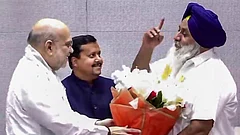
Announcing the reunion in New Delhi, Union Home Minister Amit Shah described the SAD as the 'big brother' in the alliance and said the two parties would contest all 117 Assembly seats together. He also indicated that the senior partner would get the chief minister's post if the alliance secured a victory.
Calling the partnership a symbol of Hindu-Sikh brotherhood, Shah said both parties wanted to build a stable alliance that would endure. The reunion revives a political relationship dating back to the 1960s, which has played a significant role in shaping Punjab's electoral politics.
To understand what this reunion means, it is important to look at how the alliance began, the electoral successes it delivered and the farm laws dispute that eventually brought it to an end.

How The Partnership Began
The roots of the BJP-SAD relationship predate the formation of the BJP itself. Its political foundations were laid in between the 1950s-60s, when the Shiromani Akali Dal began working with the Bharatiya Jana Sangh, the BJP's predecessor.

The Akali Dal was already an established political force in Punjab when the Jana Sangh was founded in 1951. While the Akalis drew much of their support from Sikh and rural constituencies, the Jana Sangh gradually built its base among urban Hindu voters.
Despite their different ideological foundations and social bases, the two parties found common ground in Punjab's electoral politics. Their first significant political understanding took place in 1967, when the Akalis joined the Jana Sangh as part of a wider non-Congress coalition in the state.
The arrangement was not yet the formal electoral partnership that would emerge later. However, it established a political understanding based on their complementary support bases and shared opposition to the Congress.
Parkash Singh Badal played an important role in sustaining this relationship. Known for his political pragmatism, he worked with parties that did not necessarily share the Akali Dal's ideological positions. Following Punjab's reorganisation in 1966, several coalitions involving the Jana Sangh took shape.
The cooperation was not without differences. Questions involving religion, federalism and Punjab's relationship with the Centre remained areas of political disagreement. However, the two parties managed to work together without resolving every ideological difference.
The BJP came into existence in 1980, carrying forward the political legacy of the Jana Sangh. Punjab, meanwhile, entered a turbulent period marked by the Akali movement, the Dharam Yudh Morcha, Operation Bluestar, the assassination of former Prime Minister Indira Gandhi, the anti-Sikh violence that followed and years of militancy.
The political upheaval made cooperation between the two parties more complicated. Their relationship was not a consolidated electoral partnership throughout this period, but the understanding that had developed between them remained relevant.

How The Alliance Became An Electoral Force, 1996-2012
A defining moment in the BJP-SAD relationship came in 1996, when Parkash Singh Badal, along with senior BJP leaders Atal Bihari Vajpayee and LK Advani, helped turn their earlier political understanding into a more structured partnership.
Badal was among the early supporters of the Vajpayee-led National Democratic Alliance (NDA), with the SAD emerging as one of the BJP's important regional allies.
The arrangement offered electoral advantages to both parties. The Akali Dal brought a strong rural network and substantial support among Sikh voters, while the BJP had an established presence among urban Hindus. Their respective constituencies allowed them to combine their political strengths without directly competing for the same sections of voters.
The relationship between Badal and Vajpayee also helped strengthen the partnership. Badal often described the closeness between the two parties in personal terms, comparing their relationship to "nails and skin" and describing them as "the two eyes".
The alliance delivered a major electoral victory in the 1997 Punjab Assembly elections, when the SAD-BJP combine came to power with Parkash Singh Badal as chief minister. The result established the partnership as a dominant political arrangement in the state.
The two parties returned to power in 2007 after spending five years in Opposition. By then, their division of political responsibilities had become more established, with the Akali Dal retaining its principal strength in rural constituencies and the BJP drawing support largely from urban areas.
The alliance reached another high point in the 2012 Assembly elections, when the SAD-BJP government returned to power for a second consecutive term. It was a significant electoral outcome as Punjab had not seen an incumbent government return for consecutive terms since the state's reorganisation in 1966.
The partnership also continued during the transition from the Vajpayee era to the Narendra Modi-led BJP. In the 2014 Lok Sabha elections, the two parties contested together, while Harsimrat Kaur Badal, wife of Sukhbir Singh Badal, joined Modi's Union Cabinet.
The relationship was increasingly driven by a new generation of leadership, with Sukhbir Singh Badal taking charge of the Akali Dal's organisational and electoral machinery.

Electoral Setbacks And The Farm Laws Fallout, 2017-22
The SAD-BJP alliance began facing electoral difficulties in the 2017 Punjab Assembly elections, when the Congress returned to power under Captain Amarinder Singh and the Aam Aadmi Party emerged as a significant challenger.
For the Akali Dal, the result marked a setback for a party that had dominated Punjab politics for years. The BJP, meanwhile, continued to face limitations in expanding its organisational presence beyond its urban constituencies.
The two parties remained together, but the election exposed changes in Punjab's political landscape and raised questions about the electoral formula that had sustained the alliance.
The 2019 Lok Sabha elections were the last major electoral contest fought by the BJP and SAD as allies. Their relationship, however, soon came under pressure over the Centre's farm legislation.
Agriculture and farmers' concerns have traditionally been central to the Akali Dal's political identity due to its longstanding connections with Punjab's farming community. As protests against the three farm laws introduced by the Modi government gathered momentum in Punjab and spread across the country, the party faced pressure over its association with the BJP-led government.
In September 2020, Harsimrat Kaur Badal resigned from the Union Cabinet in protest against the farm laws. Sukhbir Singh Badal subsequently announced the SAD's decision to leave the NDA, formally ending the alliance with the BJP later that month.
The separation marked a major rupture in a partnership that had survived ideological differences, political upheavals and changes in leadership.
The Modi government repealed the three farm laws in November 2021. However, their withdrawal did not immediately restore the relationship between the two parties.
The political consequences of the split were visible in the 2022 Punjab Assembly elections, when the BJP and SAD contested separately. The AAP won 92 of the state's 117 seats, while the Akali Dal was reduced to three seats and the BJP secured two.
This was a sharp contrast to the alliance's earlier electoral performances. In the 2007 and 2012 Assembly elections, the two parties had together won 68 seats.
There was another attempt to explore an understanding before the 2024 Lok Sabha elections, but negotiations failed to produce an alliance. Both parties eventually contested separately.

A Renewed Partnership
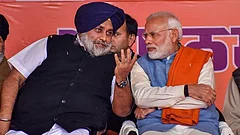
The possibility of a BJP-SAD reunion gathered momentum in 2026 following a meeting between Prime Minister Narendra Modi and SAD chief Sukhbir Singh Badal, reviving speculation about an alliance ahead of the 2027 Punjab Assembly elections.
For the SAD, the reunion comes amid efforts to rebuild its political base after its electoral decline, while the BJP has been seeking to expand its presence in Punjab. Subsequent political signals and Amit Shah's remarks about an NDA government in Punjab further fuelled speculation.
On Tuesday, the two parties formally announced their alliance. Shah described the SAD as the 'big brother' and indicated that the senior partner would get the chief minister's post if the alliance won. Both parties intend to contest all 117 seats.








