An Indian cargo ship was attacked off Oman's coast.
One sailor died, while 13 crew members survived.
More than 120 commercial vessels have faced attacks since February 28.
Union Shipping Minister Sarbananda Sonowal said an Indian-flagged cargo ship came under attack off Oman's coast on Monday. One of the 14 Indian crew members on board later died from his injuries.
Sonowal wrote on his X, “The Indian MSV AL JUSUFI, carrying 14 Indian seafarers, was struck by an unidentified aerial object while navigating near the coast of Oman. While 13 crew members safely evacuated and were rescued by the Omani Coast Guard."
One of the 14 Indian crew members died in the attack. The deceased was identified as Gandhar Nahim Ajij, who hailed from Gujarat, the minister said.
The Indian embassy in Oman is coordinating with local authorities to help the 13 survivors. The ministry is also making arrangements to bring the surviving crew back to India and repatriate the deceased seafarer's mortal remains.
Attacks On Vessels In Strait Of Hormuz
The attack on the Indian vessel comes amid a growing number of incidents targeting commercial ships in and around the Strait of Hormuz since the US-Israel war with Iran began on February 28.

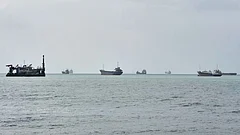


According to Al Jazeera, more than 120 attacks on commercial vessels have been reported since the conflict began, based on data from the International Maritime Organisation (IMO) and the UK Maritime Trade Operations (UKMTO).
October was the worst month so far, with 29 ships hit, surpassing the 20 attacks recorded in March. On October 29, the Panama-flagged tanker RITI was attacked near Oman's Musandam Peninsula and caught fire.
Oman's navy evacuated all 25 crew members. A day later, another tanker, the Panama-flagged Louise 1, was struck by two limpet mines near Oman's Khasab coast, causing an engine-room fire. Its crew escaped without injuries.
The attacks have raised serious concerns about the safety of commercial shipping through the strait, a crucial route for global energy supplies. Before the war, around one-fifth of the world's oil and liquefied natural gas shipments passed through the waterway.