Gerrymandering involves manipulating electoral boundaries for political advantage.
India's delimitation debate has brought the practice into focus.
Assam's constituency changes have also triggered similar allegations.
Gerrymandering has become the latest flashpoint in India's political debate over delimitation. The term has come into focus after the Union Cabinet cleared a fresh proposal to increase Lok Sabha seats by 50% across states, reviving concerns over how parliamentary constituencies will be redrawn.
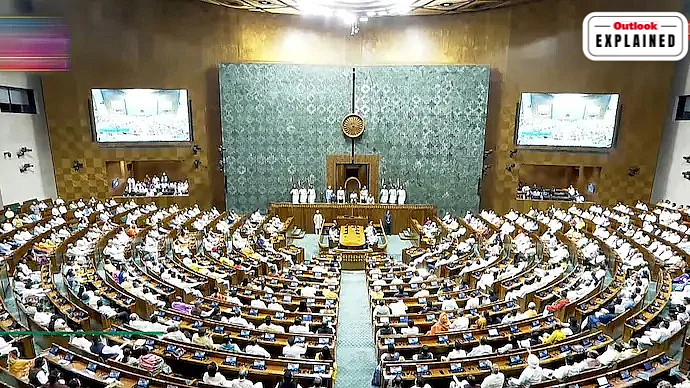
While the government says the exercise will address representation and facilitate women's reservation, Opposition parties fear that changing constituency boundaries could alter electoral outcomes in the ruling BJP's favour. The controversy raises a larger question: can redrawing an electoral map change the outcome of an election?
What Is Gerrymandering?
Gerrymandering is the practice through which the boundaries of constituencies are changed deliberately to give one political party an advantage in elections. A party can increase its chances of winning more seats using this method than its share of the overall vote would normally allow.
The term Gerrymandering comes from the year 1812 in the US. The then governor of Massachusetts, Elbridge Gerry (who became the 5th vice president of the US), signed a bill that redrew the state's Senate constituency boundaries to benefit his Democratic-Republican Party.
One of the newly created constituencies had an unusual shape that resembled a salamander. A cartoon published in the Boston Gazette on March 26, 1812, highlighted the resemblance and gave rise to the term 'Gerry-mander'. It combines the name of Massachusetts Governor Elbridge Gerry with the word 'salamander'.
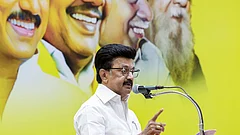
How Is Gerrymandering Done?
Gerrymandering is generally done through two methods- packing and cracking.
1. Packing: In this method a large number of voters who support an opposing political party are concentrated in a small number of constituencies. This allows the party to win those seats by big margins but reduces its chances of winning elsewhere. The party that is doing the redrawing allows its rivals to win these seats by large margins, but it reduces their chances of winning elsewhere.
For example, imagine a state with 10 constituencies in which a political party has strong support among voters. If the boundaries of constituencies are drawn in such a way that most of these supporters are concentrated in just two constituencies, the party could win those two seats comfortably but lose its influence in the remaining eight.
2. Cracking: This involves dividing a concentrated group of voters across several constituencies so that they become a minority in each one.
For example, instead of being concentrated in two constituencies, if supporters of a particular party are spread across five constituencies, they may not have enough votes to win any of them.
Both methods can change the number of seats a political party wins without a corresponding change in its overall vote share.
What Is Delimitation And How Is It Done In India?
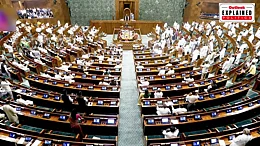
Delimitation is an exercise done by the Delimitation Commission that redraws the boundaries of constituencies. It also decides how many Lok Sabha seats each state will have. In India, the exercise is guided by Articles 81, 82 and 170 of the Constitution. Article 81 deals with the composition of the Lok Sabha, while Article 82 provides for the readjustment of seats and constituencies after a Census. Article 170 contains provisions relating to state legislative assemblies.
India has done delimitation four times in past. The first exercise took place in 1952, when the number of Lok Sabha seats was fixed at 494 based on the 1951 Census. This increased to 522 in 1963 and 543 in 1973.
However, the allocation of Lok Sabha seats among states has remained based on the 1971 Census since 1976. A constitutional amendment froze the distribution until the first Census after 2000.
Another amendment later extended this freeze until the first Census after 2026. The aim was to encourage states to control population growth without worrying about losing their share of parliamentary seats.
Why Opposition Fears BJP Could Benefit From Delimitation?
The Opposition has alleged that linking women's reservation to delimitation could give the ruling BJP an opportunity to redraw constituency boundaries to its advantage.
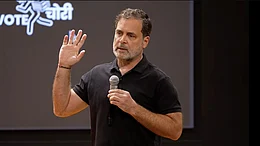
Congress leaders, including Rahul Gandhi and deputy leader Gaurav Gogoi, have pointed to the 2022 delimitation exercise in Jammu and Kashmir and the 2023 exercise in Assam, alleging that constituencies were rearranged for political reasons.
Gandhi also questioned why the caste census had been put on hold.
"Caste census has been put aside. Why? A new census is going to show an increase in the OBC population. It is also going to show an increase in the Dalit population. It is going to bring out these uncomfortable facts, which the BJP does not appreciate," he said.
He alleged that the government would instead use the 2011 Census figures and keep the number of seats unchanged until 2051.
Samajwadi Party president Akhilesh Yadav has also criticised the proposed delimitation exercise, calling it the “biggest mistake” in the BJP’s politics. He has raised concerns about its impact on states that have controlled their population growth and could lose political representation as a result.
How Assam's Delimitation Exercise Triggered Gerrymandering Allegations
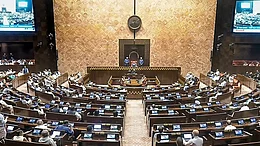
The delimitation exercise in Assam has also faced allegations of gerrymandering. The Opposition parties are accusing the BJP government of redrawing boundaries of constituencies to weaken Muslim political representation.
Assam completed its delimitation exercise in 2023. It used the 2001 Census as the basis for restructuring Assembly and parliamentary constituencies. The number of Assembly constituencies remained unchanged at 126, while the number of seats reserved for Scheduled Castes increased from eight to nine and those reserved for Scheduled Tribes rose from 16 to 19.
The allegations came into attention after the 2026 Assembly election, when reports highlighted that Muslim MLAs had largely been elected from constituencies where the muslim community forms a sizeable or majority share of voters.
According to political observers, the 2023 exercise reduced the number of constituencies where Muslim voters could decisively influence election results from around 35 to approximately 23.